
ConstructIQ
Construction cost and quantity intelligence designed to connect drawings, quantity evidence, take-off, rates, BOQ development, multidisciplinary coordination and professional validation in one traceable workflow.
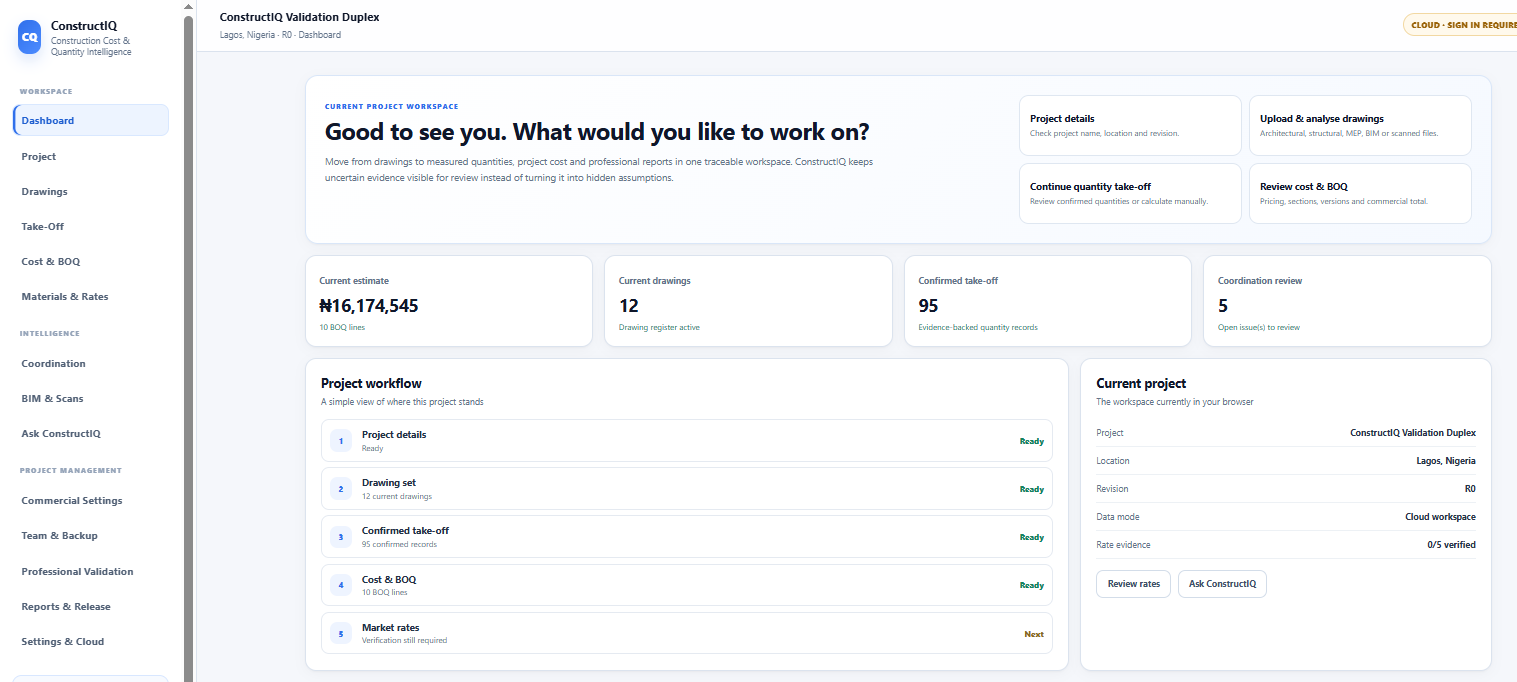
The challenge
Construction projects generate large volumes of information across drawings, quantity take-offs, material rates, Bills of Quantities, coordination and commercial reporting. When these activities are fragmented across spreadsheets, PDFs, emails and manual records, it becomes difficult to maintain traceability between a quantity, its source evidence, the rate applied to it and the figure eventually reported.
Automation introduces a second problem: a professional system must distinguish between what the evidence supports and what still requires quantity-surveyor, engineer or other specialist judgement.
The approach
ConstructIQ was designed as a connected project workspace rather than a collection of isolated calculators. The architecture follows the information as it moves through the professional workflow while preserving source evidence and explicit validation boundaries.
A workflow designed around evidence and professional review.
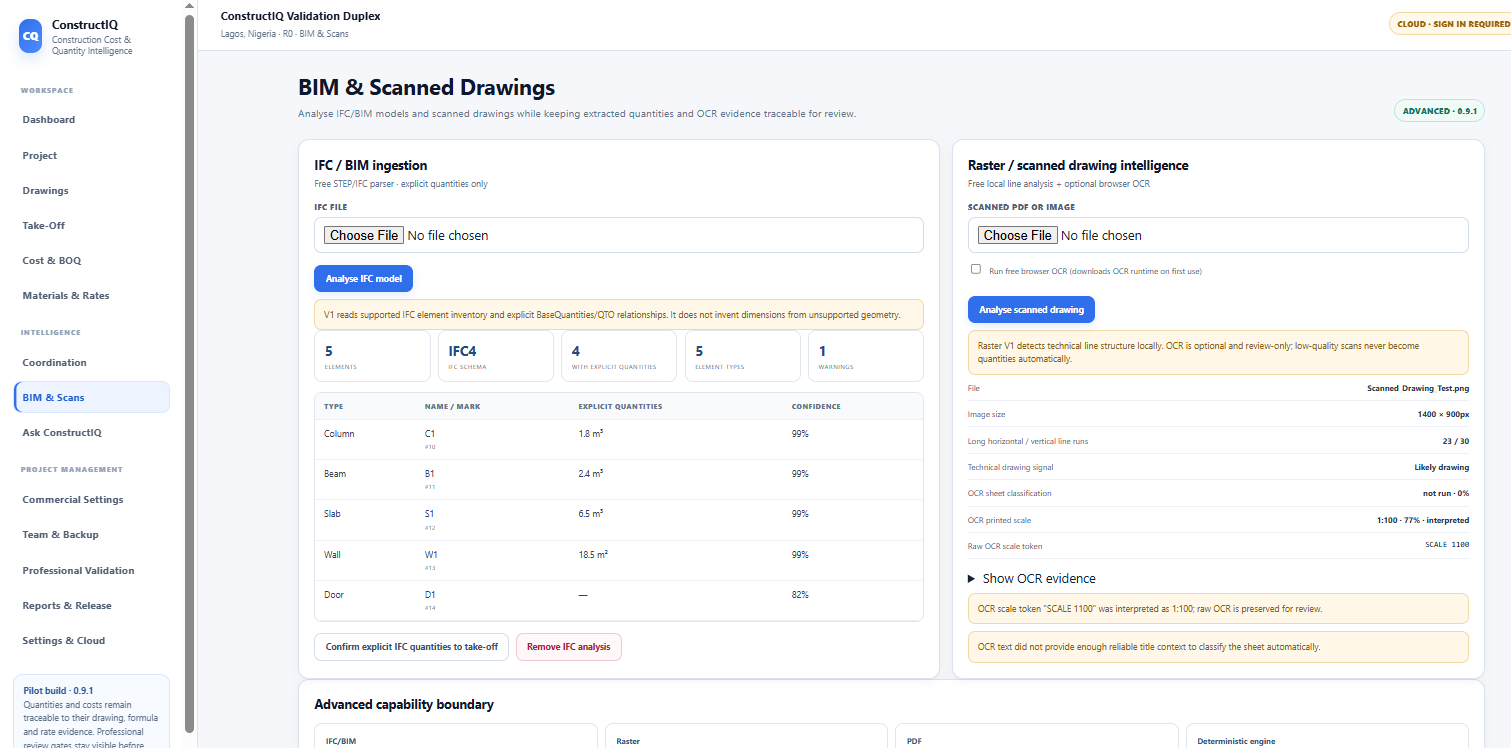
BIM & scanned-drawing intelligence
Ingest explicit IFC quantities and inspect raster or scanned drawing evidence without silently inventing unsupported geometry.
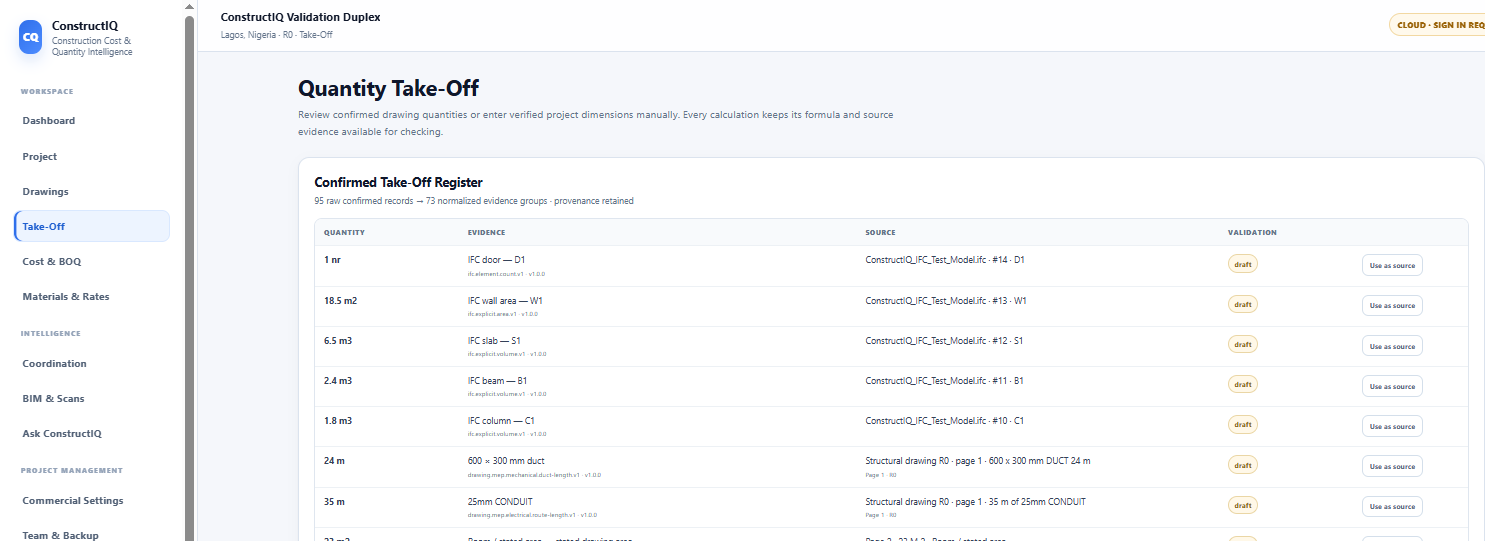
Quantity take-off
Keep measured quantities connected to their evidence, source and validation state.
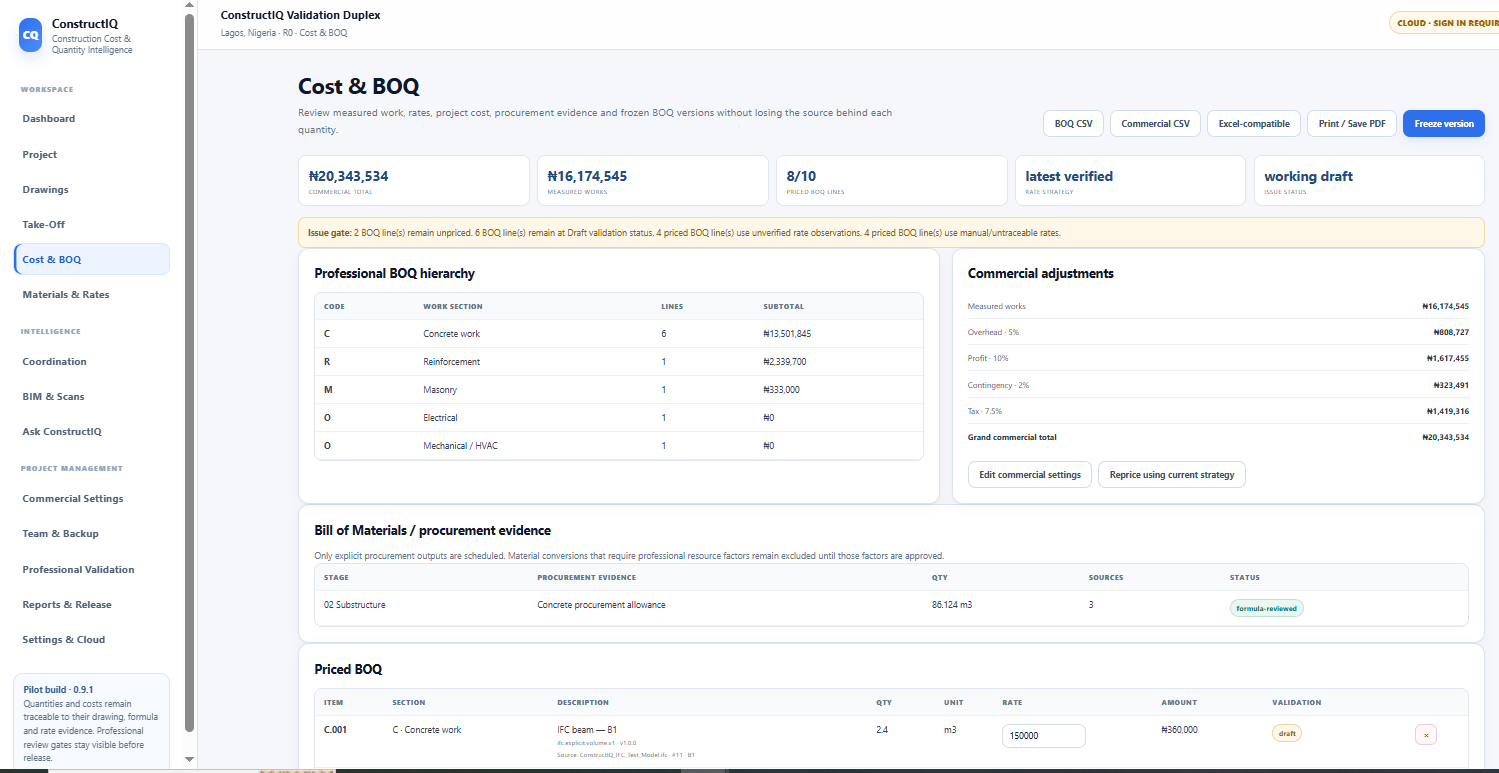
Cost & BOQ
Move confirmed quantities into pricing and structured commercial outputs while keeping evidence visible.
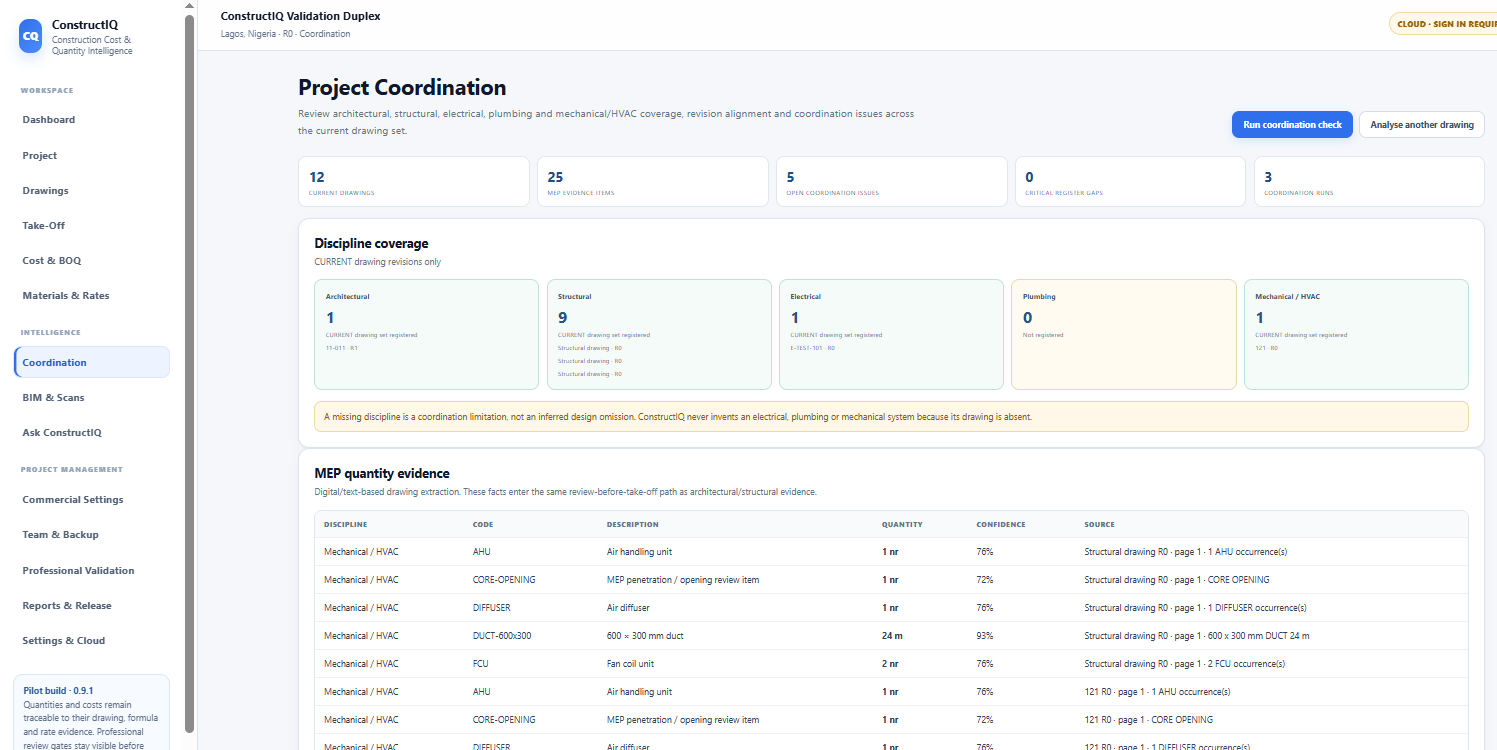
Multidisciplinary coordination
Surface coverage, gaps and coordination issues across architectural, structural and MEP evidence.
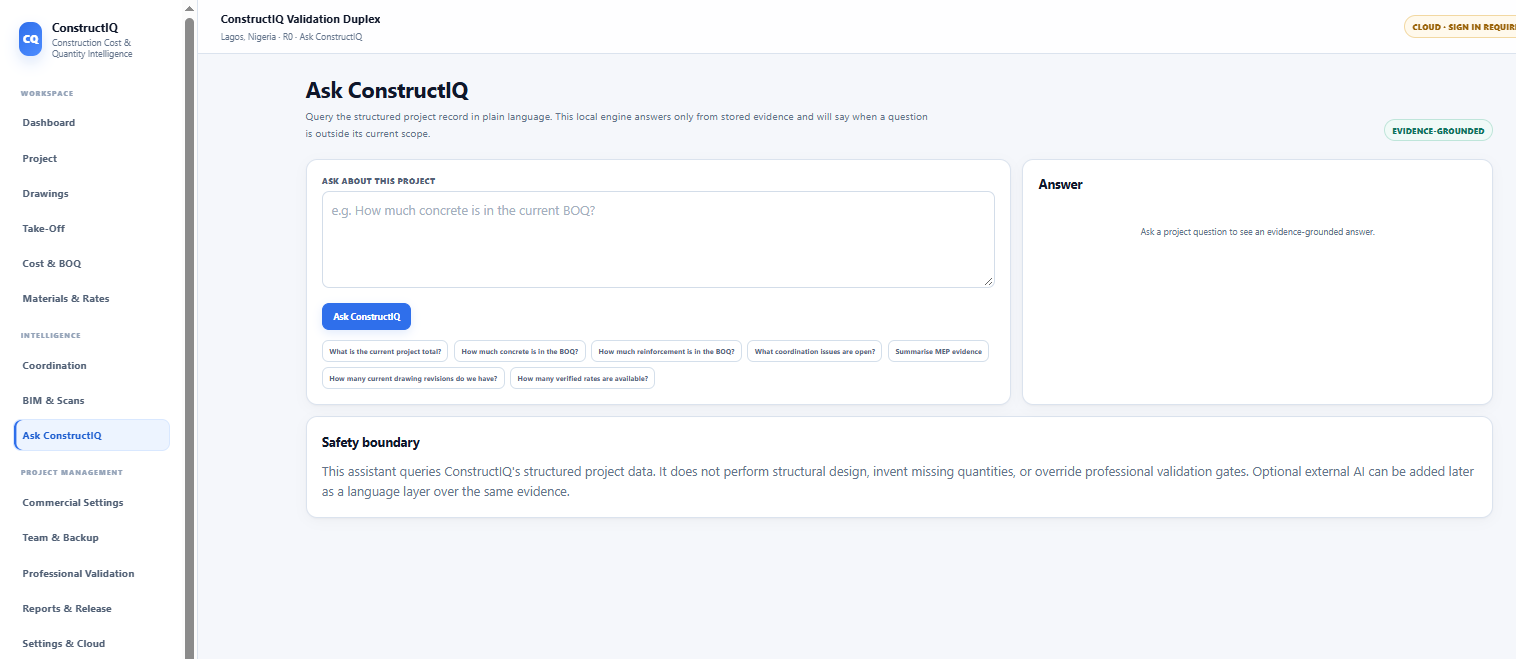
Evidence-grounded questions
Query the structured project record in plain language without treating the assistant as a substitute for missing professional evidence.
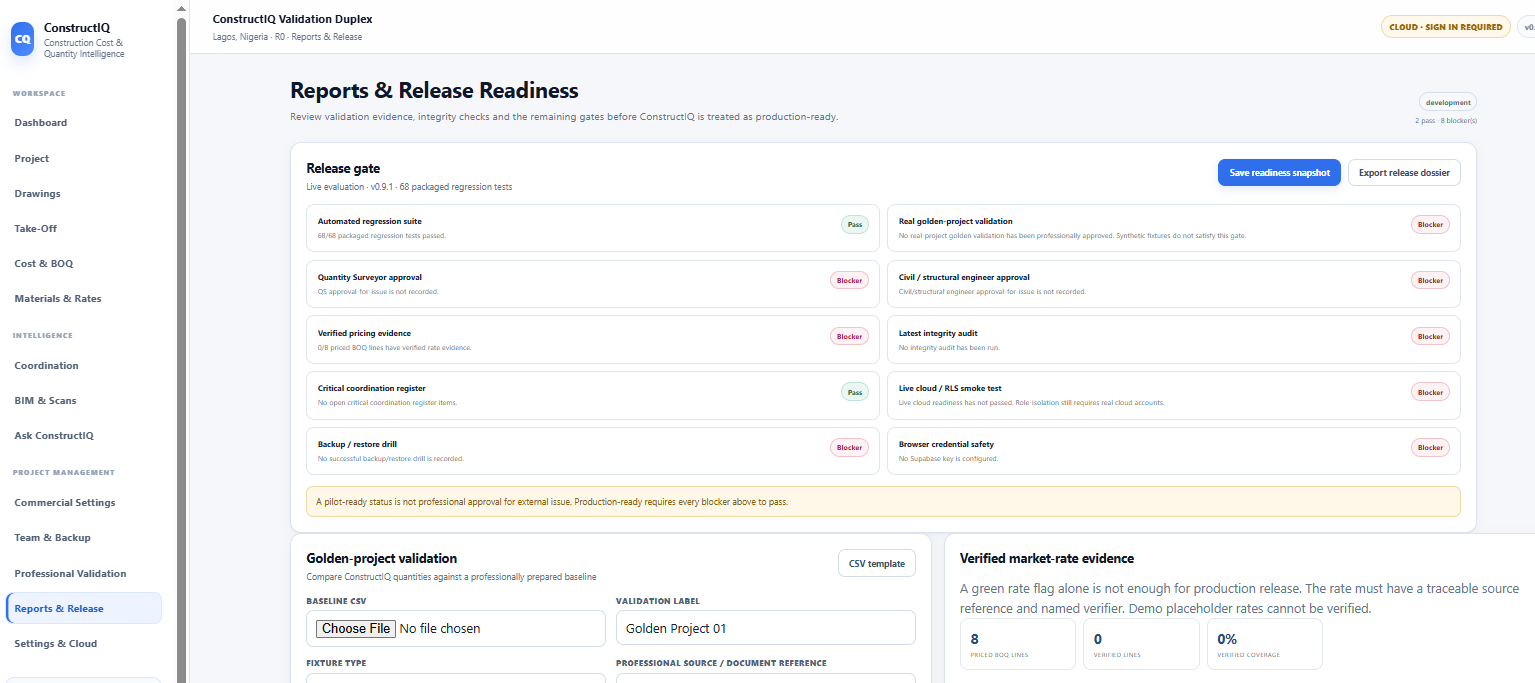
Release readiness
Make unresolved professional and integrity requirements explicit before outputs are treated as production-ready.
Design principle
Evidence before assumption.
ConstructIQ demonstrates a human-in-the-loop approach to automation: the system can structure evidence, perform supported calculations and surface issues, but it keeps unresolved professional decisions visible instead of silently inventing an answer.
Potential business value
As a development system, ConstructIQ demonstrates how a construction organisation can centralise cost and quantity information, improve traceability between drawings and commercial outputs, reduce dependence on disconnected records, make outstanding issues visible and support structured coordination without removing professional accountability.
Process analysis
Model a complex professional workflow before implementing technology.
System architecture
Connect several operational activities inside one environment.
Human-in-the-loop automation
Automate supported work while preserving judgement at critical boundaries.